The 2010 Chardonnay from Fraser Gallop Estate is one we are very excited about as a few small changes in the winemaking and vineyard have resulted in what we consider to be our best Chardonnay yet.
Firstly in the vineyard we have pulled out the Burgundy clones which we felt, never really suited our climate in Margaret River. We have a warmer site climatically than Burgundy and the Gin-Gin clone has consistently out- performed the Burgundy clones, mainly because of its’ higher acidity, later ripening and greater intensity of flavour which comes from the hen and chicken berries. So now our Chardonnay is 100% Gin-Gin clone.
We are now harvesting our grapes at slightly lower baumes than previously and this has resulted in a finer structured wine with less alcohol and higher acidity, this should enable the wine to be cellared for longer. It also seems to suit Gin-Gin clone grapes which need some restraint to the phenolic nature.
In the winery we have fine-tuned the style. We now pick in smaller slotted bins so the fruit can be cooled efficiently to 8 C overnight without any crushing of the berries. This year marks the first time we have whole bunch pressed directly to our shorter wider red fermenters for settling without enzyme, and we no longer rack the juice but go directly to barrel. The very heavy solids stick to the floor of the tank and we get relatively clear juice with some turbidity to allow the natural yeasts some nutrients for fermentation, this makes for happier wild yeast.
And most importantly we now are in an enviable position of not having to extract every last drop out of the grapes and we now only extract around 500L / tonne of grapes, only the best free run juice makes it into our Chardonnay.
Vintage 2010
Another sublime season in Margaret River with one of the warmest and driest seasons on record. A return to normal rainfalls in winter (855 mm from May –September) saw the sub-soil moisture replenished for the long dry summer (76mm from October – April). Warm spring conditions without too much wind during November and December enabled most varieties to flower and set fruit well with more bunches/vine than normal resulting in yields up by 15-20 % across the board. Yields would have been considerably higher if it wasn’t for the 2 days of above 40C in mid- January that shrivelled and cooked berries that were fully exposed to the sun, however this event did not appear to affect quality in the reds as these berries dried up to nothing, however some Chardonnay was affected and sun burnt bunches were removed before harvest. The grapes are all hand-picked which gives us a second opportunity to cull out any untoward bunches of grapes. The warm weather accelerated the ripening of Chardonnay, Sauvignon Blanc and Semillon which all came off in a flurry and made for a vintage that started 1 week earlier than usual. On March 23rd a severe hail storm hit Perth and passed 50 kms away to the East of us luckily and we got very little rain from it. The average max. temperature for March 2010 was 26.5C compared to 24.5C in 2009 so conditions were still a little warmer than we liked, however as far as vintages go we would rate this as one of our best yet.
Viticultural Notes
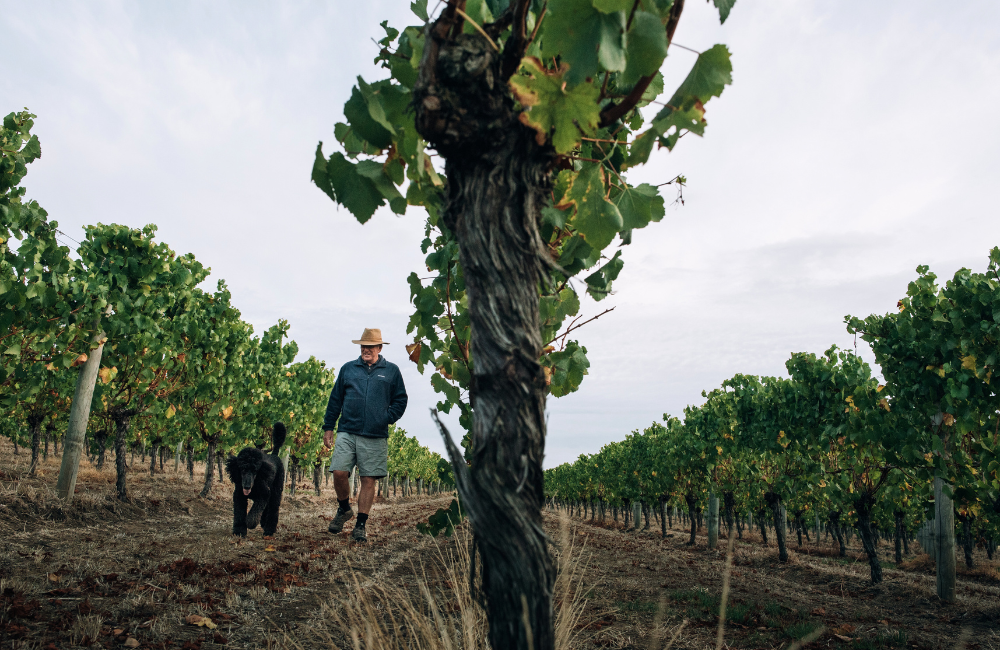
The The Chardonnay is sourced off unirrigated blocks of Mendoza clone (Gin-Gin clone) resulting in concentrated fruit. The vines are caned pruned to ensure the fruit is of the highest quality. Throughout the growing season two passes with the vine trimmer were required to ensure maximum fruit exposure. Just after berry set the vines were leaf plucked both sides of the vines to open the canopy and ensure good fruit exposure to aid in flavour development.
Winemaking Notes
Once hand harvested, the fruit was transferred in small slotted bins directly to cool rooms and chilled to 8°C overnight. The bunches were gently whole bunch pressed to around 500L/tonne, this allowed us to extract only the juice from the fleshy interior of the berries and not the juice next to the skin, thereby minimising phenolic (tannic) pick up and resulting in a juice with exquisite seamless structure. The chardonnay juice was then transferred to a stainless steel tank where it was chilled and settled overnight, it was then transferred via gravity flow to French barriques, of which one third were new. Fermentation was carried out primarily by wild yeast (indigenous yeasts found in the vineyard) and the barrels were kept in our refrigerated cool room so temperatures could be regulated to retain primary fruit characters. After fermentation the barrels were stirred weekly for a month, this resulted in a creamy mouth feel to complement the linear acid structure of the wine. The wine spent eight months in barrel before being blended and bottled.
Pale straw with green hues.
Aromas of white peach, citrus and struck flint.
Flavours of quince, lemon curd and peach are the initial impressions. A tightly focussed and very precise wine showing seamless fruit purity with crystalline acidity and an excellent long grapefruity finish.
Will develop further complexity with 5 - 7 years careful cellaring.